Erectile dysfunction (ED) — when a man is unable to get an erection firm enough for sex — has several treatment options, including pills (phosphodiesterase type 5 inhibitors, such as Viagra or Cialis), self-injections, suppositories, and penile implants. Vacuum erection devices (VEDs) are another effective method.
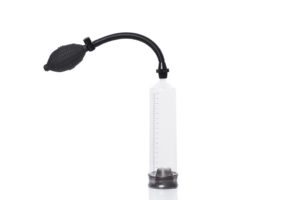
When a man uses a VED, he creates a vacuum using a cylinder and a special pump. This process allows blood to flow into the penis and create and erection.
VEDs are considered a “second-line” ED treatment. Men usually try pills first. However, pills don’t work well for all men, and some men cannot take them. (For example, men who take nitrates for heart conditions should not use phosphodiesterase type 5 inhibitors because combining the drugs can cause a unsafe drop in blood pressure.)
Many men have success with VEDs. In fact, up to 70% of patients achieve erections using VEDs, according to UpToDate. The devices are generally easy to use and can cost less than refilling prescriptions. Some men like VEDs because they don’t involve medications, injections, or surgery. VEDs can also create an erection in a matter of minutes; there is no need to wait for a medication to take effect.
Many men have success with VEDs.
VEDs may also help men who develop ED after certain procedures, like prostate surgery. Other terms for VEDs are vacuum constrictive devices, external penile rigidity devices, and penis pumps.
How does a man get an erection?
Typically, when a man is sexually aroused, blood flows through arteries into the penis. Blood makes the penis hard and firm. To keep the hardness, veins constrict (tighten) so that no blood flows out. Once the man ejaculates (or when he is no longer stimulated), the blood leaves the penis, making it flaccid (soft) again.
ED often happens when there is a problem with blood flow. For example, arteries may be narrowed, restricting the amount of blood that can get in. And veins may not constrict properly — blood can’t stay in or it leaks out.
How does a vacuum erection device work?
A typical VED has three parts:
- A plastic cylinder that fits over the penis
- A pump that creates the vacuum. The suction brings blood into the penis. The pump may be operated by hand, or it may be battery-operated.
- A constriction ring (sometimes called a tension ring or cock ring), which is worn at the base of the penis to keep the erection rigid. (Note: The constriction ring should not be worn for longer than 30 minutes.)
Using a VED can take practice, so be patient.
VED models vary, and you should always follow the instructions of the device manufacturer. Be sure to read them thoroughly before you start using a VED. In general, however, men using a VED follow these steps:
- Apply a water-soluble lubricant to the base of the penis and to the rim of the cylinder. This makes a secure seal.
- Place the cylinder over the penis (but not the scrotum). The constriction ring should be around the opening of the cylinder, close to the base of the penis.
- Activate the pump to create a vacuum. Your device instructions will tell you how to do this. Depending on the type of device you’re using, this may be done by hand or by pressing a power button. If you have questions, call the manufacturer or check its website.
During this step, you may feel pressure, but you shouldn’t feel pain. If you do, release some of the pressure according to the manufacturer’s instructions. Your device should have a safeguard that limits the amount of suction you can apply. Using too much suction can damage your penis. - Slide the constriction band off the cylinder and onto the base of your penis. This keeps the erection firm. You can remove the cylinder at this time. As noted above, do not use the constriction ring for more than 30 minutes. If you would like to continue sexual activity, wait 60 minutes and use the VED again to create a new erection. Be careful not to fall asleep while wearing the ring.
- After sex, remove the band. Your penis should gradually become flaccid at this point.
Using a VED can take practice, so be patient. You’ll find the technique that works best for you.
Does using a VED have any side effects? Are there risks?
Some men do have side effects when using a VED. These may include:
- Petechiae. These are small red spots of blood that appear on the skin, caused by leaking capillaries (tiny blood vessels) in the penis. Petechiae can happen if you use too much suction or wear a constriction ring that is too tight. They should go away in a few days if you take a break from using the device.
Too much suction may also cause other bleeding and bruising. - Blue color, coldness, or numbness. This can happen after putting on the constriction band. Applying a warm compress before sex may help. After the band is removed, these symptoms usually go away.
- Difficulty with ejaculation. Some men don’t ejaculate when they reach orgasm, as the constriction ring restricts the flow of semen. Semen may also feel stuck. This usually isn’t harmful, but if you have pain with ejaculation, talk to your doctor.
Note: Even if you do not ejaculate, you should not consider the VED a form of birth control.
Who shouldn’t use a VED? VEDs aren’t appropriate for all men. Talk to your doctor about the safety of VEDs if you:
- have a blood or bleeding disorder, like hemophilia or sickle cell disease
- have a history of ischemic priapism (an erection lasting longer than 4 hours)
- take blood thinners or anti-platelet drugs

Does a VED make my penis larger?
No. A VED just makes it easier to get an erection. Some VED manufacturers claim that their products can enlarge the penis, but this is not backed up by scientific research.
Can I use a VED with other ED treatments?
Under a doctor’s guidance, some men use VEDs along with erectile dysfunction drugs like Viagra and Cialis. Always check with your doctor first.
How do I get a VED?
Start by talking to your doctor. They can recommend a safe product that will fit your needs. A medically-approved device will have a limiter to control the amount of suction. Having a limiter is safer and lowers the risk of injury.
VED devices can also be found online and in sex shops. However, these models are usually not recommended, as they might not have the proper safeguards, like a limiter.
Resources
EAU Patient (European Association of Urology)
“Vacuum Erection Devices for Erectile Dysfunction”
(Last updated: June 2026)
https://patients.uroweb.org/condition/erectile-dysfunction/all-treatments-ed/vacuum-erection-devices
Mayo Clinic
“Penis Pump”
(October 15, 2025)
https://www.mayoclinic.org/tests-procedures/penis-pump/about/pac-20385225
MedlinePlus
“Vacuum Erectile Devices for Erection Problems”
(Review date: April 19, 2026)
https://medlineplus.gov/ency/patientinstructions/000985.htm
UpToDate
Khera, Mohit, MD, MBA, MPH
“Treatment of Male Sexual Dysfunction”
(Last updated: March 20, 2026)
https://www.uptodate.com/contents/treatment-of-male-sexual-dysfunction
VeryWellHealth.com
Myhre, James and Dennis Sifris, MD
“Using a Penis Pump for Erectile Dysfunction (ED)”
(Updated: June 14, 2026)
https://www.verywellhealth.com/penis-pumps-for-ed-5210450